As an Amazon Associate, I earn from qualifying purchases. This post may contain affiliate links.
The first thing I remember isn’t a band.
It’s the lawn.
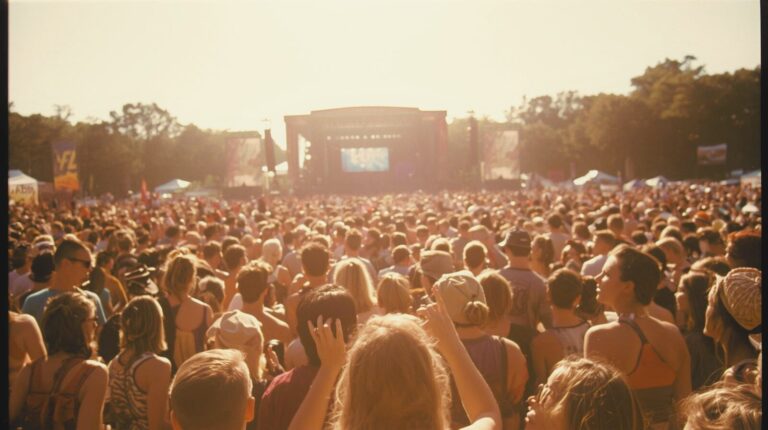
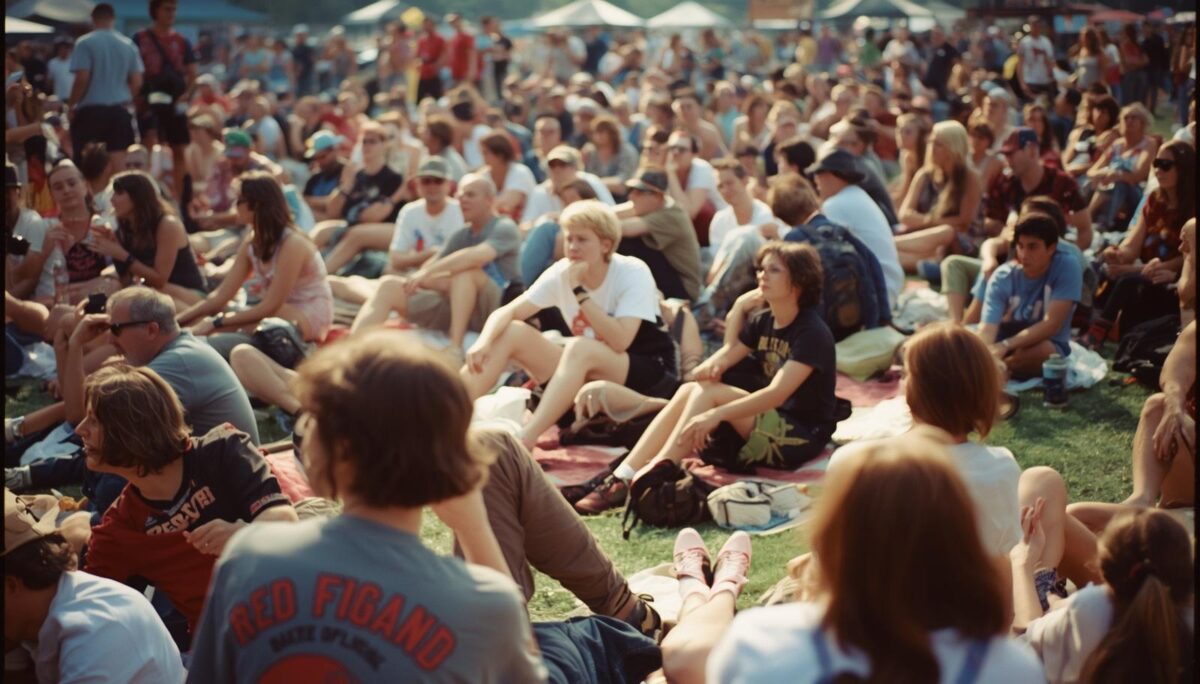
A stretch of grass filled with blankets, groups of friends, and a kind of low hum that only happens when an outdoor crowd is settling in for something. No rushing, just… arriving.
By the time I was going to 1990s music festivals in college, that scene had a sort of cadence to it, something I’ve written about more broadly when looking back at them. You’d find your spot, drop a blanket, and that was home base for the day. People our age, some older, spread out in every direction, and I remember it as a mix of relaxed and charged energy.
There was alcohol somewhere, sure. Every now and then a faint wisp of cigarettes, cloves, and pot in the air. But mostly, it felt communal in a way that’s hard to describe now. Positive and uncomplicated.
And in hindsight, very specific to that moment in time.
You Knew the Bands — But Not Everything
We went in knowing the lineup, and the headliners were the draw. Especially the kind of rotating, traveling lineup that defined things like Lollapalooza in the ’90s, where the tour itself became part of the identity. The reason you bought the ticket, sometimes after waiting in line overnight or dialing a phone number over and over, hoping you’d get through before everything sold out. (I still remember missing Pearl Jam tickets in 1994 because the line just stayed busy.)
But beyond that, there were edges.
Side stages you didn’t fully track. Bands you hadn’t gotten around to listening to yet. Gaps in your knowledge that weren’t filled in by an algorithm or a playlist someone else had curated for you.
You’d scale up your listening in the weeks before with CDs, mix tapes, maybe a mix CD if you were getting slightly more advanced, but it was still loose and conversational. “You’ve heard this one, right?” or “Let’s listen to that one again!” passed between friends.
And then you’d show up and let the day unfold, which is part of what makes looking back and trying to rank or define the “biggest” festivals (like in “Best ’90s Music Festivals (Ranked and Remembered)”) a little tricky. It was never just about size.
Did you know? The first Lollapalooza in 1991 wasn’t meant to be a recurring festival — it was planned as a farewell tour for Jane’s Addiction.
You Stayed Put
Most of the time, we didn’t move much.
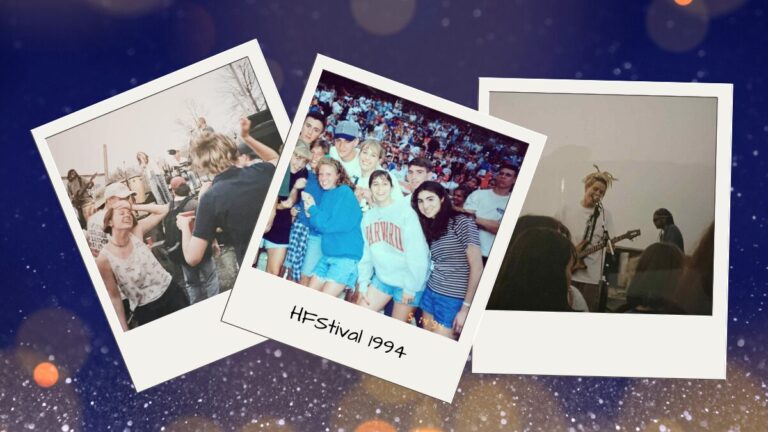
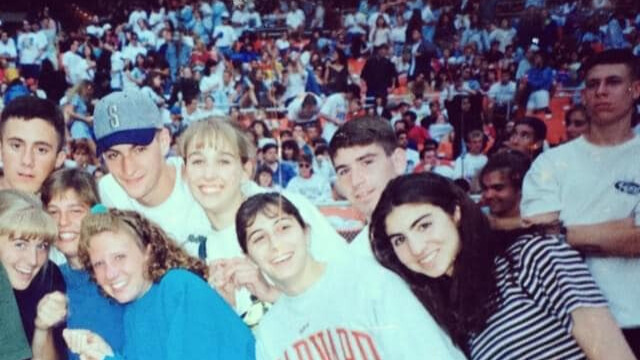
You claimed your space on the lawn and stayed there, your group anchored by a blanket and whatever you’d brought with you. This felt especially true at shows like HFStival 1994, where the day unfolded around you rather than the other way around. The music came to you. You weren’t trying to figure out how to manage your schedule or catch every possible set.
You watched who you came to see and listened to whoever else was on. Sometimes you discovered something new, but just as often, you didn’t, and that was fine.
That structure, if you can even call it that, was part of what made 1990s music festivals feel different. You weren’t curating the experience in real time. You were inside it.
The Lead-Up Was Part of It
Getting tickets wasn’t frictionless.
You bought them in person — places like Tower Records or similar record stores — or you tried your luck calling in, hoping you’d get through before they were gone. Sometimes we waited in line overnight. Other times we missed out.
And when you did get them, that was its own small event.
The lead-up mattered. Not more than the festival itself, but enough to shape it. We talked about it with friends and planned things loosely. We spent the weeks leading up to the show intentionally listening to the bands we were about to see, over and over.
There was anticipation built into the process. Excitement, yes, and also a kind of earned access.
Everything Was Analog — and You Were, Too
Sometimes, one person in the group brought a disposable camera. Otherwise, you were just… there.
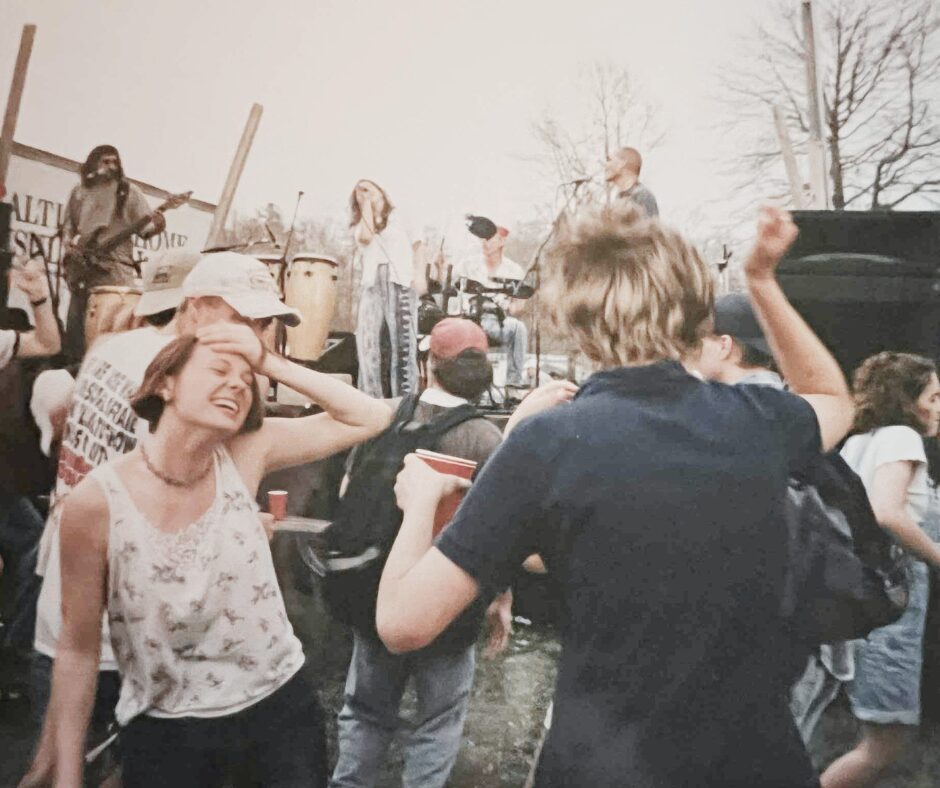
No phones. No documenting in real time. No checking set times every five minutes or texting to coordinate meetups. You found your people, and you stayed with them. You looked at the stage, or each other, not a screen (aside from a big screen flanking the stage).
It’s easy to say that meant we were more present. That’s probably true, but it also just wasn’t a choice we were making. It was the only option.
The result, though, is what stands out now: that feeling of being fully inside the moment, without anything pulling your attention somewhere else.
It Felt Unified, Even If You Didn’t Call It That
At the time, we weren’t thinking about cultural shifts or the arc of alternative music.
But we felt something.
Being surrounded by people who loved the same music, who showed up for the same bands, who were tuned into the same cultural wavelength created a kind of unspoken connection. Especially in your late teens and early twenties, when that kind of shared identity carries more weight.
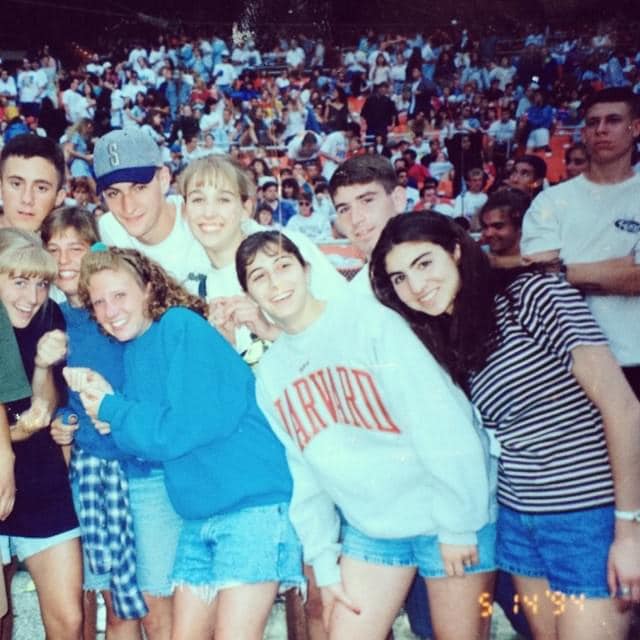
Looking back, it’s easier to connect that feeling to the broader tone of the era — what I explore more in “When ’90s Music Got Dark: Grunge, Alternative Rock, and the Sound of Gen X” — but in the moment, it was simpler than that.
You just knew you were in the right place.
Less Information, Less Friction — More Trust
We showed up without overthinking it.
There wasn’t a checklist of logistics to run through beforehand. You didn’t spend time researching water policies, bag sizes, payment methods, or contingency plans.
You brought what you thought you might need and figured the rest out when you got there.
Today, it feels different, in part because, well, we’re older. But also, things are just more engineered these days. You want to know everything in advance, from whether water is free to whether you can bring sunscreen or what kind of bag is allowed.
None of that is inherently bad. In a lot of ways, it’s better. But it changes the texture of the experience.
Back then, there was more uncertainty, but also more trust. You’d show up, settle in, and let the day happen.
Did you know? Many 1990s music festivals didn’t publish detailed set times in advance, which meant you showed up for the day, not a perfectly planned schedule.
It Was Also About When You Were in Your Life
Part of what made 1990s music festivals feel different has nothing to do with festivals.
It was where you were in your life.
Going with friends as a teenager or in your early twenties, in an environment like that, doesn’t really have a grown-up equivalent.
Last year I saw The Avett Brothers and Gregory Alan Isakov with friends — two incredibly fun shows. The music was still there, and the shared experience was still there.
But the vibe wasn’t the same. Because you’re not the same.
And that might be the clearest answer to why ’90s music festivals felt different.
It wasn’t just the touring models, the analog experience, or the way you claimed your space on the lawn, though all of that mattered.
And even when you try to answer more straightforward questions, like what actually counted as the biggest events of the era (something I unpack more directly in “What Were the Biggest Music Festivals of the 1990s?”), you end up back at the same conclusion: the experience is what stuck.
It was that for a certain window of time, everything lined up. The music, the culture, the way events were structured, and the stage of life you were in.
You didn’t have to think about it. You just showed up and it felt like enough.