As an Amazon Associate, I earn from qualifying purchases. This post may contain affiliate links.
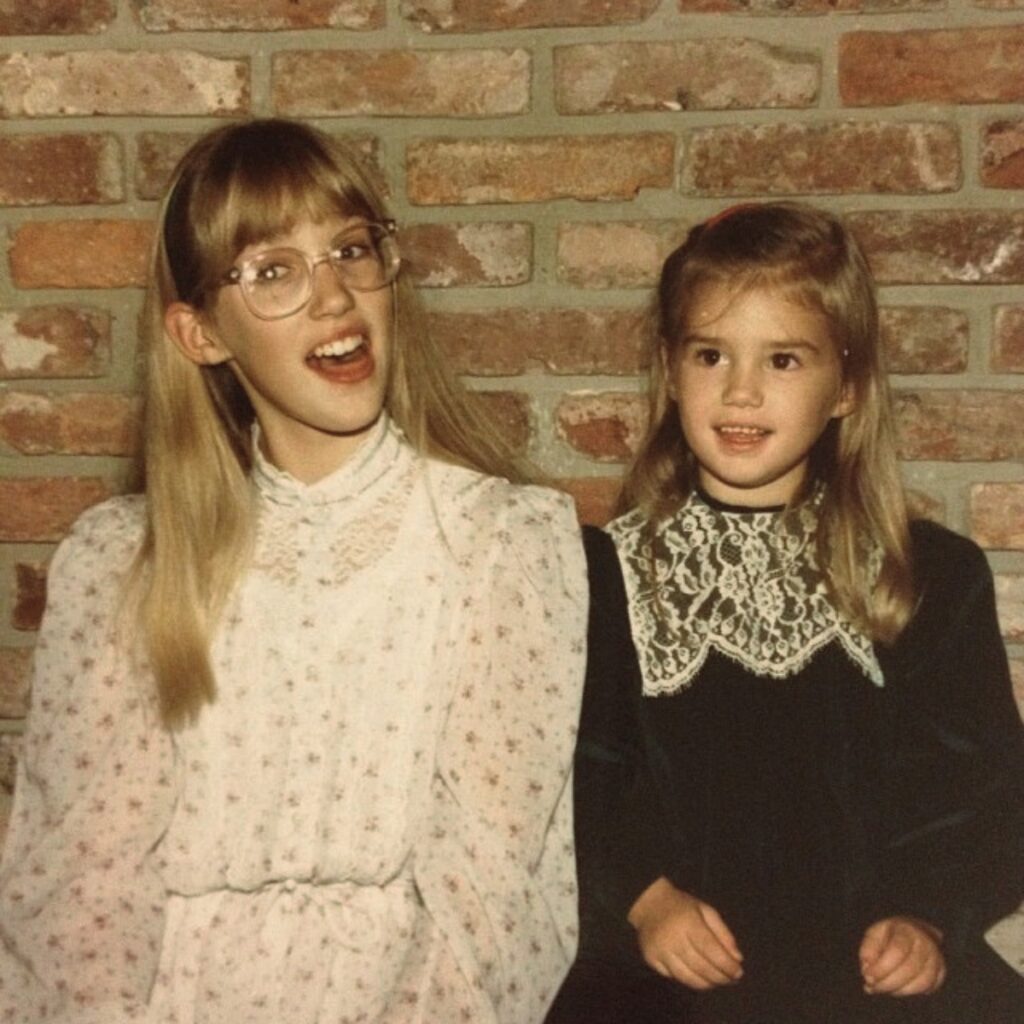
When I was in elementary school, my best friend and I spent a surprising amount of time pretending we lived in the 1800s.
We’d raid closets for women’s skirts and blouses, layering whatever we could find into makeshift pioneer outfits. Petticoats were essential. I even had a hoop skirt, which probably made our version of frontier life considerably more fashionable than practical.
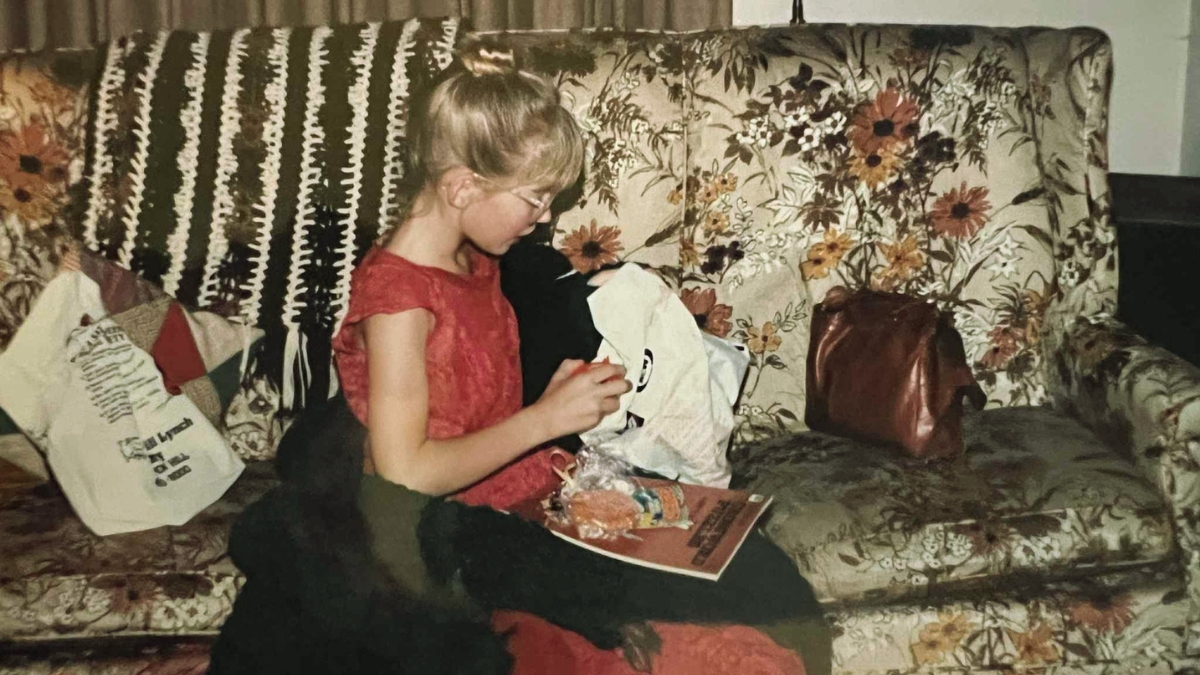
We weren’t particularly concerned with historical accuracy. One of my favorite outfits was an oversized red lace dress from the 1950s, complete with a hoop skirt that helped transform it into something vaguely appropriate for a fancy 1800s party.
I loved everything about the world we were imagining. The calico dresses, log cabins, country stores, and the idea of making maple syrup candy in the snow. I could picture myself wandering through Walnut Grove or sitting beside a fireplace in a little cabin, wearing something floral and vaguely appropriate for the 19th century.
What I couldn’t picture was how much work it took to keep that fireplace burning.
I discovered Laura Ingalls Wilder’s Little House books and the television series around the same time, and they became part of the same childhood experience. The books filled in the details of pioneer life, while the show gave those characters faces, voices, and a town that felt familiar.
I was drawn to Laura and Mary, their adventures, their friendships, and the world they inhabited. The adults were there, of course, but they were mostly supporting characters in my imagination. Charles and Caroline provided the structure, while the kids supplied the interesting stuff.
Decades later, Netflix’s new adaptation of Little House on the Prairie has given me a reason to revisit that world, this time through adult eyes. I’ve tried to approach it with the same sense of wonder I had as a child, much as I did when watching Anne With an “E,” another modern adaptation of a childhood favorite.
And the wonder is still there.
The difference is that now I know a few things about life that I didn’t know when I was 9.
The Prairie Wasn’t Quite as Charming as I Remembered
As a child, I was fascinated by the details of pioneer life. The Ingalls family’s belongings, the food they prepared, the clothing they made, and the small comforts they created in their homes all seemed wonderfully appealing.
I didn’t spend much time considering what happened when the crops failed, money ran out, or someone became seriously ill.
I certainly wasn’t thinking about the logistics of feeding a family through a long winter with limited supplies and no grocery store down the road.
Reading the books as a child, I absorbed those hardships as part of the adventure. There were obstacles to overcome, but they were woven into a larger story about family, resilience, and making a home wherever the Ingalls family happened to land.
As an adult, it’s harder to separate the adventure from the uncertainty.
The work of simply surviving is something I notice constantly now. The cooking, cleaning, farming, building, repairing, and endless preparation for whatever might come next — never mind raising a family and tending to livestock. There was no real separation between work and home because maintaining the home was the work.
Did you know? Laura Ingalls Wilder originally wrote a memoir called Pioneer Girl, but publishers rejected it. With help from her daughter, Rose Wilder Lane, she transformed those memories into the Little House novels, leaving out some hardships and changing details along the way. Among the experiences omitted was the family’s time in Burr Oak, Iowa, where they lived and worked at a hotel while struggling financially.
And then there was the money.
One scene in the newer Netflix adaptation really caught my attention. Laura and Mary begin to understand the extent of their father’s financial troubles, including the debt he’s carrying.
I don’t remember that aspect of Charles Ingalls being especially prominent in the original television series (if even part of the storyline at all), although it’s entirely possible it was there and I simply wasn’t paying attention.
After all, what elementary schooler is particularly interested in household debt?
At this age, though, financial insecurity is one of the first things I notice. The Ingalls family wasn’t simply working hard to build a better life. They were living with the possibility that all the work might not be enough. Over and over.
And that changes how I see Pa.
Charles Ingalls Wasn’t Always the Man Television Made Him
Michael Landon’s Charles Ingalls embodied a particular ideal of American fatherhood in the 1970s and early 1980s: hardworking, principled, protective, and seemingly capable of solving almost any problem.
Landon’s version of Little House certainly offered a sanitized view of frontier life, particularly through its portrayal of the white frontier patriarch as the family’s moral center. But the series was also surprisingly willing to tackle difficult subjects, including racism, addiction, abuse, and prejudice. As The Guardian explores in its retrospective, the show often emphasized compassion and community responsibility, even while presenting an idealized version of the white frontier father that didn’t always align with historical reality.
He wasn’t perfect, but the original series generally presented him as a man whose moral compass rarely wavered.
Did you know? Despite the family’s reputation for rugged self-reliance, Charles Ingalls sometimes depended on government assistance and charity. During the grasshopper plagues of the 1870s, he received aid that helped his family survive. The real Pa couldn’t always solve everything himself.
The Charles Ingalls of the books feels different to me now, particularly when considered alongside the newer adaptation. He’s a father trying to provide for his family while making decisions that don’t always work out. His optimism and ambition are admirable, but they also come with consequences.
He can be loving and well-intentioned without always being right.
I still appreciate both versions of Pa. But as an adult, I find the more complicated Charles Ingalls more satisfying.
Maybe that’s because I no longer need adults in a story to have everything figured out.
When I watched the original series as a child, Charles and Caroline were almost like what we’d call non-player characters (NPCs) today. They were important to the world, but Laura, Mary, Nellie, and the other children were the ones I followed.
I wasn’t analyzing Charles and Caroline’s marriage, questioning their financial decisions, or considering the burden of raising children in an unpredictable environment.
I was wondering what Laura would do next.
Now I find myself watching the parents just as closely as the children, recognizing the weight of decisions that once seemed like little more than background details.
It’s not necessarily that Charles Ingalls has changed, aside from the differing versions presented in each adaptation. It’s that I finally understand why being Charles Ingalls might have been so difficult.
The Childhood Stories That Stayed with Me
Of all the characters and storylines from Little House, Laura and Mary remain the ones I remember most vividly.
I remember the familiar sibling dynamics, the school experiences, and the relationships that shaped their childhoods. I remember the small details of domestic life from the books, including making maple syrup candy in the snow in Little House in the Big Woods.
Those details made pioneer life feel tangible. They were the things I could imagine doing myself.
Mary’s blindness was different.
Even as a child, I understood that losing her sight was devastating. It was one of the storylines that stayed with me, both because of what happened to Mary and because of how it affected the family.
But my understanding of what it meant was limited.
Did you know? Although the books attribute Mary’s blindness to scarlet fever, medical researchers believe she more likely suffered from meningoencephalitis, an inflammation of the brain and surrounding tissues. Mary later attended the Iowa College for the Blind from 1881 to 1889.
Today, I think about the practical realities of navigating frontier life without sight. The physical demands of daily living were substantial even for someone without a disability. For Mary, the challenges would have been greater, particularly in a world with limited accommodations and opportunities.
I also think about what happened as she grew older.
What did independence look like for a young woman who was blind in the late 1800s? What opportunities existed for education, employment, and building a life of her own?
Her education was an important part of her story, reminding us that disability didn’t necessarily mean a life without learning or personal achievement. But the barriers she faced were significant.
As a child, I was focused on the event itself: Mary had lost her sight.
As an adult, I’m more interested in what came after.
That’s one of the things I’ve noticed about revisiting childhood favorites. We remember the dramatic moments, the conflicts, and the resolutions. But growing older makes us more curious about the lives that continued after the immediate story was over.
The Neighbors Who Became Family
Not everything about Little House feels different to me now.
One thing I’ve always appreciated is the sense of community, particularly the way neighbors depended on one another.
The original television series made Walnut Grove feel like a place where everyone knew everyone else’s business, which wasn’t always a good thing. Mrs. Oleson alone could have kept a neighborhood Facebook group busy for years.
But beneath the gossip, rivalries, and disagreements was the idea that people showed up for one another.
When someone was sick, struggling, or facing a crisis, neighbors often became an extension of family.
That appealed to me as a child, but it resonates more deeply now.
When my family moved from Maryland to Illinois, we had no relatives within roughly 700 miles. We weren’t exactly homesteaders setting out across the prairie, but I came to appreciate what it means to build a community when your extended family isn’t nearby.
There’s a practical comfort in knowing that people around you can become more than acquaintances. They can become the people you rely on, celebrate with, and turn to when life gets complicated.
Of course, the books and television adaptations sometimes romanticize the idea of frontier community. Real relationships were undoubtedly more complicated, and not everyone experienced the same sense of belonging.
Still, the underlying idea is one I appreciate now more than I did as a kid.
Sometimes family is defined as much by proximity and shared experience as it is by blood.
When the Stories Grow Up with Us
Revisiting Little House also reminds me how much television storytelling has changed.
The original series belonged to an era when family television frequently delivered a moral lesson before the closing credits. A character made a mistake, someone offered a bit of wisdom, and the episode generally left viewers with a clear understanding of what they were supposed to learn.
As a child, I didn’t think much about that structure. It was simply how television worked.
Watching older shows now, I sometimes find those lessons a little heavy-handed. There’s a sweetness to them that can feel almost excessive, even when I agree with the message.
The newer Little House adaptation takes a different approach, allowing difficult circumstances and complicated decisions to carry more of the meaning without always wrapping everything up so neatly.
That’s not necessarily a criticism of the original series. It was created for a different audience, in a different television era, with different expectations about family entertainment.
The books are another part of that conversation.
Laura Ingalls Wilder drew on her family’s experiences to create stories that have introduced generations of readers to American frontier life. But the books are works of historical fiction, not untouched records of everything that happened.
They reflect the memories, perspectives, and storytelling choices of their author, just as the television adaptations reflect the creative decisions of the people who made them.
And that’s where revisiting Little House becomes interesting.
As adults, we bring a different understanding of the world to these stories. We notice questions about gender expectations, disability, race, Native American representation, and the realities of westward settlement that may never have occurred to us as children.
We also recognize that the experiences of people living in the same place and time weren’t necessarily the same.
Some of those conversations can be uncomfortable, particularly when they challenge the version of a beloved story we’ve carried with us for decades.
But I don’t think acknowledging those differences means we have to abandon our affection for the original material.
I enjoy seeing classic stories adapted for modern audiences because they offer an opportunity to revisit familiar characters and circumstances with different perspectives.
That doesn’t automatically make a newer version better.
It makes it different.
And sometimes those differences give us more to think about.
There’s Still Something About the Prairie
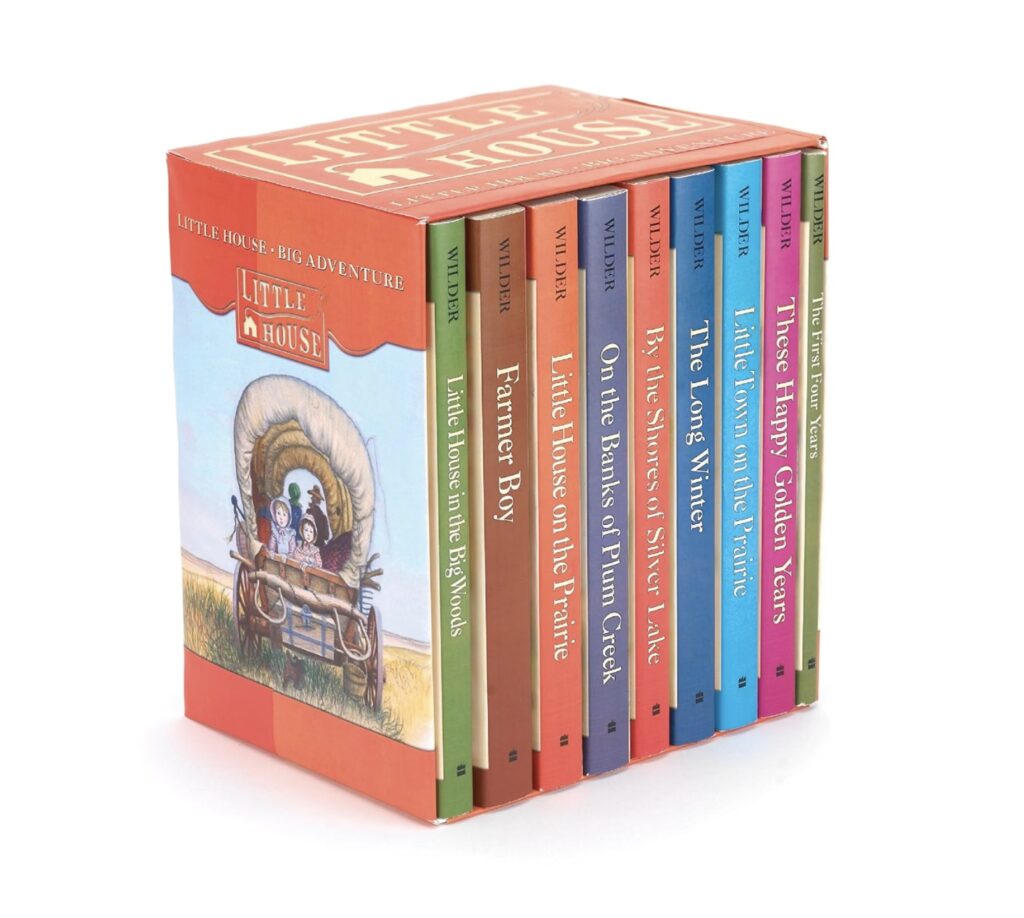
If someone asked me today whether the Little House stories are worth revisiting, I’d recommend the books without hesitation.
I’d also recommend exploring the newer Netflix adaptation, particularly for anyone interested in a portrayal of pioneer life that feels less idealized.
I’m a little more hesitant about recommending the original television series to someone who didn’t grow up watching it. I still appreciate it, but I wonder how its pacing, storytelling, and sometimes overly tidy moral lessons would resonate with a modern viewer encountering it for the first time.
My own children didn’t grow up with the series. I remember starting the books with my daughter when she was young, but they never quite captured her imagination the way they captured mine.
And that’s OK. Childhood favorites aren’t necessarily hereditary.
I still love the world that Laura Ingalls Wilder created. I still find the details of pioneer life fascinating, and I can still appreciate the appeal of a log cabin, a country store, and a dress made from calico.
But I no longer look at the world and see only the charm.
I see the work, uncertainty, sacrifice, and complicated decisions that made those lives possible. I notice the adults who once seemed to exist mostly in the background, and I think about the challenges facing the children long after their childhood adventures ended.
The stories haven’t necessarily changed, although the ways we tell them certainly have.
What has changed most is my perspective.
And that’s one of the best reasons to revisit the books and television shows we loved growing up. Not simply to remember how they made us feel, but to discover what we notice now.
I can still imagine myself in that calico dress, wandering through a little prairie town.
These days, though, I’m also wondering who’s going to chop the firewood.