As an Amazon Associate, I earn from qualifying purchases. This post may contain affiliate links.
The video store next to my dad’s flower shop in Rockville, Maryland, was small. All the movie cases were translucent plastic and the owners kept a big binder behind the counter with the names of the movies they had. I remember wanting to watch River Phoenix movies, probably sometime in the early ’90s, and one of the owners thumbed through the binder and suggested The Mosquito Coast. I can’t remember if I took her up on it, though…
That was where my family rented movies. Blockbuster was where I went with friends. We usually walked in with some idea of what we wanted, roamed the aisles anyway, and had a backup flick in mind because there was always a chance our first choice would be out. Picking the movie was as much fun as watching it because we made browsing part of the night.
Did you know? In Clerks (1994), Randal works at the video store next door to Dante’s Quick Stop. That was a real pair of neighboring shops in Leonardo, New Jersey. Director Kevin Smith worked at the Quick Stop himself, so the crew filmed there overnight with the shutters closed.
For the store, though, whether our first choice was on the shelf was a business decision that started long before we walked in.
Why Video Stores Needed Those Tapes Back
Every copy a video store bought had to earn back its cost a few rentals at a time. Once a tape had paid for itself, the store could keep earning rental fees from that same copy. If you ran a small store, how many copies of a new release would you buy? Buy too few and people looking for that movie might leave empty-handed. Buy too many and you’d still be looking at a shelf full of them after everyone had moved on to something else.
Blockbuster found a way to make that bet a little easier. It made deals with major studios to pay less for tapes up front and give the studios a share of the rental money. That made it easier to stock more copies of the movies people were most likely to come in for. Even then, a copy couldn’t earn another rental while it was sitting next to somebody’s VCR. A due date gave customers a reason to bring it back. A late fee gave them a reason to remember the due date.
I remember people complaining about late fees and about being charged for forgetting to rewind a tape. I don’t remember late fees being a big deal for us. In fact, I barely remember returning the movies at all! Choosing the movie is what sticks in my memory.
For Blockbuster, those overdue rentals added up. In 2004, the company reported $622.4 million in late-fee revenue, or about a tenth of its total revenue. In its financial statements, Blockbuster called them extended viewing fees, which makes forgetting to return a movie sound like something you meant to do.
Then the Movie Came to You
By the time I tried Netflix by mail, two things felt new. I could get a movie without leaving the house, and I suddenly had what felt like an endless catalog at my fingertips. Browsing online made it easier for me to find something new, and once I started getting DVDs in the mail, I don’t remember going back to video stores.
Netflix charged a monthly subscription. You made a list of movies online, received DVDs in the mail, and sent them back in prepaid envelopes. You could keep a disc as long as you wanted — no late fees. Sending it back freed up a spot for the next movie in your queue.
Blockbuster tried its own DVD-by-mail service and eventually let subscribers bring a mailed DVD into a store and swap it for another movie. It also advertised “No Late Fees,” with some fine print. If you kept a rental past the grace period, the store could charge you for buying it. Return it within the policy window and you could get a credit, minus a restocking fee. As with the Columbia House and BMG CD clubs, the offer made more sense once you knew what happened after the deadline.
Redbox gave us another option. You could pick up a DVD from a kiosk while you were already out and watch it that night. Meanwhile, big-box stores were selling DVDs cheaply, and Blockbuster was carrying debt that made it harder to spend money on a turnaround. It filed for bankruptcy protection in 2010.
Redbox’s kiosk business shut down in 2024, when its parent company went into bankruptcy.
I liked how easy Netflix made it to find something to watch, even before the current state of streaming. I still miss walking into a store with friends, having a movie in mind, and taking our time looking around even if it was right there on the shelf. It’s similar to the nostalgia of being a mall rat in the ’80s and ’90s, roaming the stores and food court without any actual shopping plans.
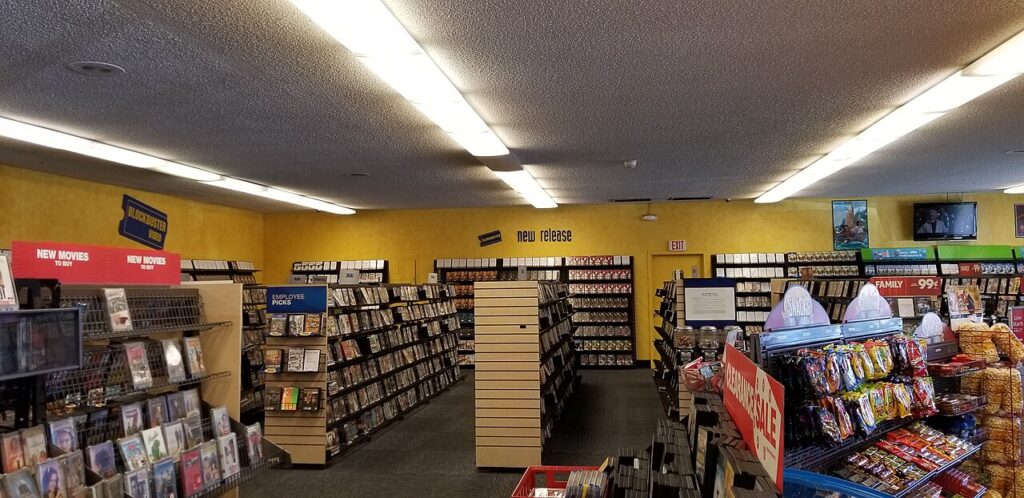
There’s still one Blockbuster in Bend, Oregon, where you can do just that. I’d have a backup movie in mind.