As an Amazon Associate, I earn from qualifying purchases. This post may contain affiliate links.
From “This Is Your Brain on Drugs” to Smokey Bear, the PSAs that still live in our heads
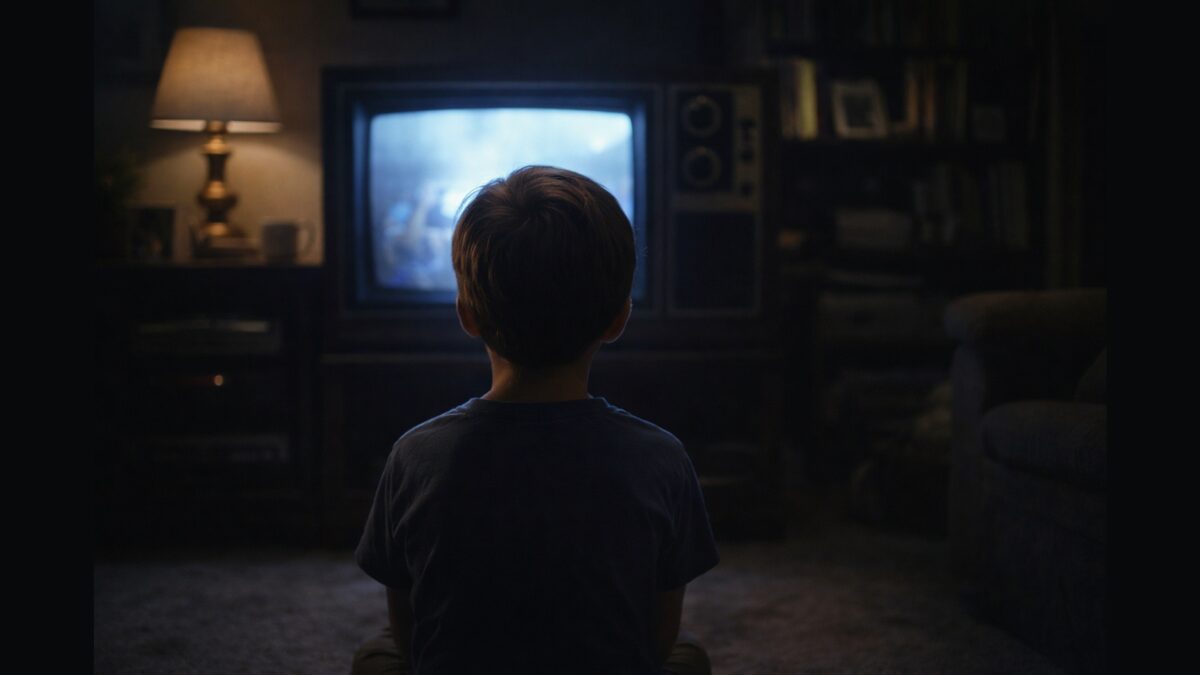
I remember my childhood living room more clearly than I remember when the commercial actually aired. Early ’80s? Late ’80s? Early ’90s? The couch. The TV. The low, constant glow of daytime TV on a sick day, or the prime-time lineup after dinner. Sometimes I watched alone. Sometimes my sister was there. Sometimes the whole family was half-paying attention. The screen cut away from whatever we were watching, and there it was again. A cast iron skillet. A cracked egg. A calm adult voice explaining what I was seeing.
“This is your brain on drugs.”
The egg sizzled. I watched it cook. I remember the image clearly, even now. What I don’t remember is feeling much of anything about it. No fear. No curiosity. No sense that this message was meant for me. The metaphor was memorable, but the meaning felt abstract, distant, like it was aimed at a future version of myself I hadn’t met yet. Years later, I could still recite the tagline. At the time, it landed with polite apathy. I watched it. I absorbed it. I moved on.
That disconnect feels important in hindsight. A lot of the public messages Gen X grew up with assumed kids were already standing at the edge of danger, waiting for one final warning to tip the scales. They spoke in adult tones, with adult stakes, and very little sense of what kids actually needed in order for the message to land. “Just Say No” had the same problem. It sounded decisive. It became shorthand. Then it became a joke. The message was loud, but it didn’t give us much to do with it.
Watch: This Is Your Brain… This Is Your Brain On Drugs
If you grew up in the ’80s or ’90s, you’ve seen this more times than you can probably count. The image stuck, even if the message didn’t.
Video via Anthony Kalamut (Southside AdGuy) on YouTube
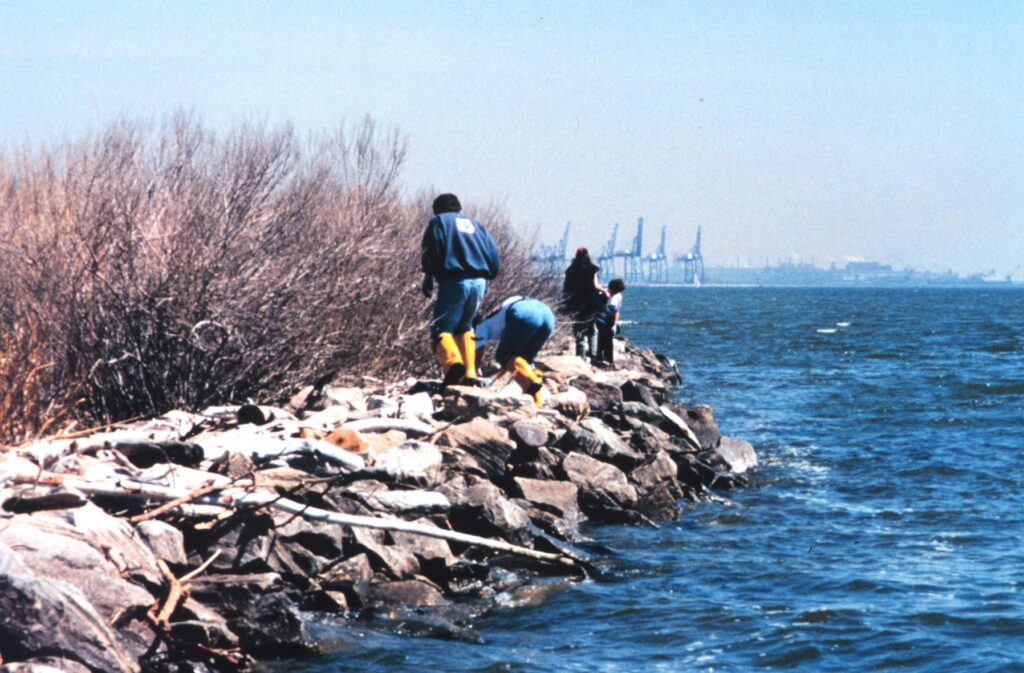
Other warnings worked differently. They didn’t ask kids to imagine a future mistake or weigh abstract consequences. They showed harm happening in real time and handed us something tangible to do about it. Cutting up plastic six-pack rings is the clearest example. You saw animals tangled in them. You understood the problem immediately. You grabbed scissors. I still cut them up today without thinking, decades later. That message didn’t rely on fear or metaphor. It relied on clarity and agency.
What’s funny is, I can’t remember who taught me to cut those plastic rings. I just remember knowing I was supposed to. That lesson didn’t arrive with a slogan or a single unforgettable commercial. It showed up everywhere, in pieces. In classrooms during environmental units. In library books and school assemblies. In conversations at home that sounded less like instruction and more like assumption. It wasn’t dramatic or urgent. It was repeated, reinforced, and quietly normalized across mediums that didn’t announce themselves as warnings at all. By the time you encountered a six-pack ring in the wild, the decision had already been made for you. You didn’t debate it. You didn’t question it. You reached for scissors.
It’s striking how many of these messages were less about education and more about installing reflexes. Some were abstract and moralizing. Others were literal and actionable. All of them assumed kids would absorb the warning on their own, without much explanation, and carry it forward quietly. That expectation shaped how a generation learned to think about risk, responsibility, and consequence long before we had the language to describe any of it.
After-School Warnings
After-school specials lived somewhere between entertainment and warning, which made them feel both more relatable and more unsettling. They weren’t labeled as PSAs, but they functioned the same way. You tuned in expecting a story and got a lesson instead. Someone made a bad choice. Things escalated quickly. Consequences arrived fast and felt permanent. The tone was earnest, serious, and oddly heavy for the middle of the afternoon.
What stands out now is how confident these stories were in their conclusions. There was rarely room for ambiguity or recovery. A single decision could unravel everything. The message wasn’t just that actions had consequences. It was that those consequences were swift, public, and defining. You didn’t need to fully understand the issue being dramatized to absorb the takeaway: Be careful and choose wisely, because this could happen to you.
Did you know? The ABC Afterschool Special was the most recognizable after-school warning format for Gen X, but it wasn’t the only one. Similar one-hour moral dramas also aired as the CBS Schoolbreak Special and NBC Special Treat, making “after-school specials” a shared TV ritual across networks, not a single program.
In hindsight, it’s almost strange how many familiar faces passed through these roles. Actors we’d later associate with sitcoms, blockbusters, or prestige TV once showed up as cautionary examples, delivering very serious warnings to kids sprawled on living room floors with after-school snacks. At the time, we didn’t know who they’d become. We just knew the story was supposed to mean something.
Like the drug PSAs, these specials often assumed kids were already on the brink of the mistake being portrayed. They aimed straight for the moral endpoint, trusting that fear and identification would do the rest. Sometimes they worked. Sometimes they felt distant or overblown. But they reinforced a larger idea that ran through so much Gen X messaging. One wrong move could change everything, and you were expected to figure out how to avoid it on your own.
Watch: ABC Afterschool Special episode “Stoned”
After-school specials weren’t labeled as warnings, but that’s how they functioned. You tuned in for a story and absorbed a lesson, often heavier than you expected.
Video via The Museum of Classic Chicago Television (www.FuzzyMemories.TV) on YouTube
When Responsibility Was Literal
Some of the most effective warnings didn’t arrive with music or monologues at all. They were just there, woven into the background of daily life. Poison control numbers taped inside cabinets. Stickers on bottles. Magnets on refrigerators. The message wasn’t dramatic, but it was persistent. Danger didn’t only live in extreme choices or bad crowds. It lived in ordinary places, in familiar rooms, often within arm’s reach.
Paired with symbols like Mr. Yuk, these warnings taught something subtle and lasting. The world wasn’t automatically safe just because it was home. Adults might not always be watching. You were expected to notice, remember, and pause. There was no metaphor, no story arc to soften it. Just a quiet understanding that some things required caution, even if no one explained why.
Did you know? The Mr. Yuk image was created in 1971 by the Children’s Hospital of Pittsburgh as part of a local poison prevention effort. What began as a regional program was later adopted by poison control centers across the country, turning a Pittsburgh-born warning symbol into a nationally recognized campaign.
It’s also worth remembering why everything was labeled in the first place. The poison control number wasn’t everywhere because adults were paranoid. It was everywhere because there was no other option. You couldn’t look it up. You couldn’t search. In an emergency, you either already knew the number or you didn’t. The 9-1-1 number existed, of course, but everything else relied on memory, proximity, and preparation. The sticker inside the cabinet or the magnet on the fridge wasn’t decoration. It was infrastructure.
That reality shaped how warnings were delivered. Information had to live where the risk lived. It had to be visible, redundant, and immediate. Today, we can Google faster than we can find a magnet or open a cabinet. Back then, the message had to be physically present, waiting for the moment you needed it. Those labels weren’t just about safety. They were a quiet acknowledgment that help might not be instant, and that remembering mattered.
Smokey Bear worked on a much larger scale, but the lesson was similar. Many of us still remember him as Smokey the Bear, even though that was never technically his name. The phrasing stuck anyway, which feels fitting. The message mattered more than the precision. “Only you can prevent forest fires” framed environmental harm as personal and preventable, tied directly to individual behavior. For a cartoon bear, that was a lot of responsibility to hand a kid.
Watch: Smokey Bear Fire Prevention, ca. 1970 – ca. 1985
Smokey Bear PSAs framed forest fires as personal, preventable, and tied to individual responsibility, a message many of us absorbed early and never quite shook.
Video via US National Archives on YouTube
Together, these messages trained a particular kind of awareness. Pay attention, don’t assume safety, understand that your actions matter even when no one is watching. Unlike the abstract warnings about future mistakes, these didn’t ask kids to imagine who they might become. They asked them to notice what was right in front of them.
That distinction feels important in hindsight. The warnings that stuck weren’t always the loudest or the scariest. They were the ones that respected how kids actually learned responsibility. Show the risk. Make it real. Give them something to do.
Warnings Look Different Now
Warnings still exist, of course. Kids today are not growing up unprotected or uninformed. If anything, they are warned constantly. The difference is how those messages arrive and how they’re processed. Risk now comes with commentary, context, debate, and a thousand follow-up explanations. Information is searchable, shareable, and immediate. No one needs a magnet on the fridge when an answer is two seconds away.
That changes the shape of responsibility. Gen X warnings were often one-way transmissions: absorb this, remember it, act accordingly. There was no comment section, no explainer video, no space to question whether the framing made sense. The message arrived fully formed and final. You carried it quietly, sometimes without understanding it, sometimes without agreeing with it, but always assuming it mattered.
Today’s kids are invited to engage differently. Messages are discussed, challenged, reframed, and sometimes dismissed outright. Risk is more often described as systemic rather than purely personal. Responsibility is shared, negotiated, and contextualized. That doesn’t make it better or worse. It makes it different. The conditions changed, so the messaging changed with them.
It’s not that the warnings were right or wrong. It’s how they trained a generation to be alert. To pause. To assume consequences existed even when we couldn’t fully articulate them. Some messages missed the mark entirely. Others settled into muscle memory and never left. I don’t think about six-pack rings when I cut them up. I just do it. In fact, the guilt I feel if I consider not cutting them up is palpable. That’s how deeply some of those lessons embedded themselves.
The PSAs we grew up with didn’t just warn us about drugs or fires or poison. They taught us something quieter and harder to name. That the world required attention. That responsibility often arrived before explanation. And that even when the message felt abstract or out of touch, it still left an imprint. Not always fear. Sometimes just awareness. The kind that hums in the background long after the TV has been turned off.